Business Strategy
CompanionLink Scale Strategy
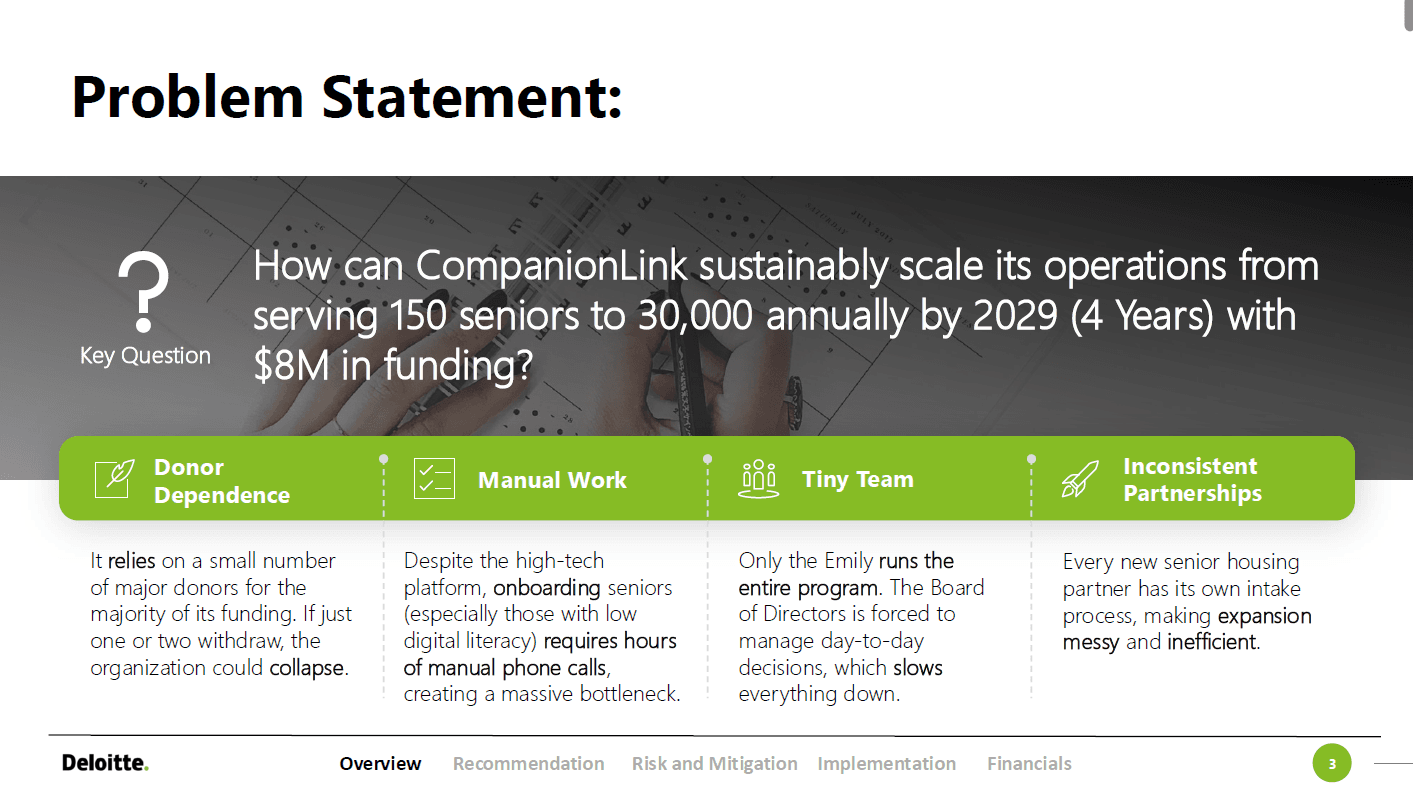
Scaled CompanionLink from 150 to 30,000 seniors/year through diversified funding partnerships, AI voice-intake automation (Boardy), and tiered volunteer operations model, reducing per-senior cost by 72%.
Deloitte Consulting Engagement
2025
Context
Deloitte Consulting Engagement
Duration
1 week
Team
Consulting team
Role
Strategy Consultant
Impact
- →Reduced per-senior cost from ~$47 to ~$13/year by Year 4
- →Enabled scale from 150 to 30,000 seniors/year by 2029
- →Secured $8M funding strategy across multiple sectors
- →Presented to Deloitte partner and CompanionLink CEO
Problem
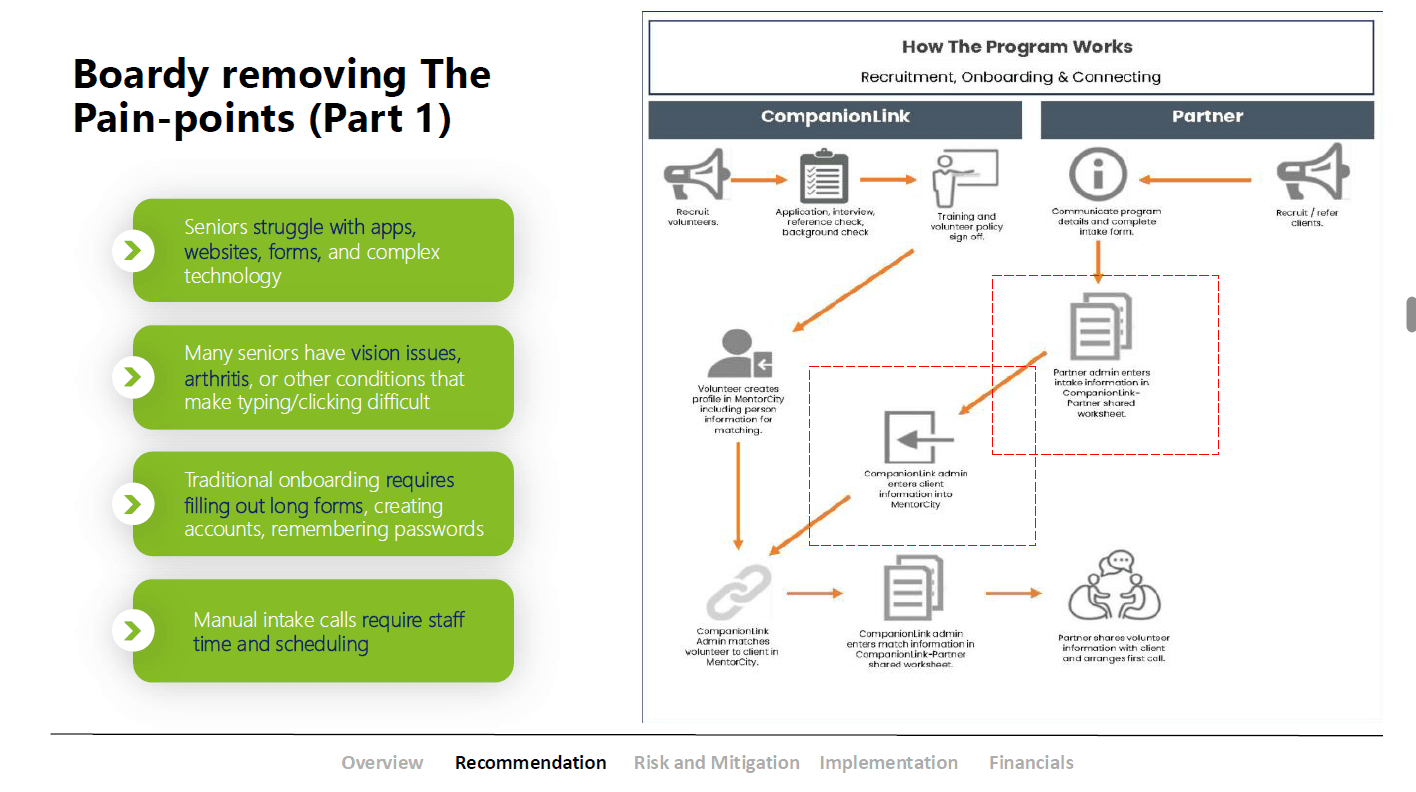
CompanionLink, a nonprofit matching isolated seniors with volunteers, needed to scale from ~150 seniors to 30,000 seniors annually by 2029 with $8M funding. Critical barriers included funding concentration risk, manual onboarding bottlenecks (3–4 staff hours per senior), insufficient operational bandwidth, and fragmented partner intake processes.
Solution
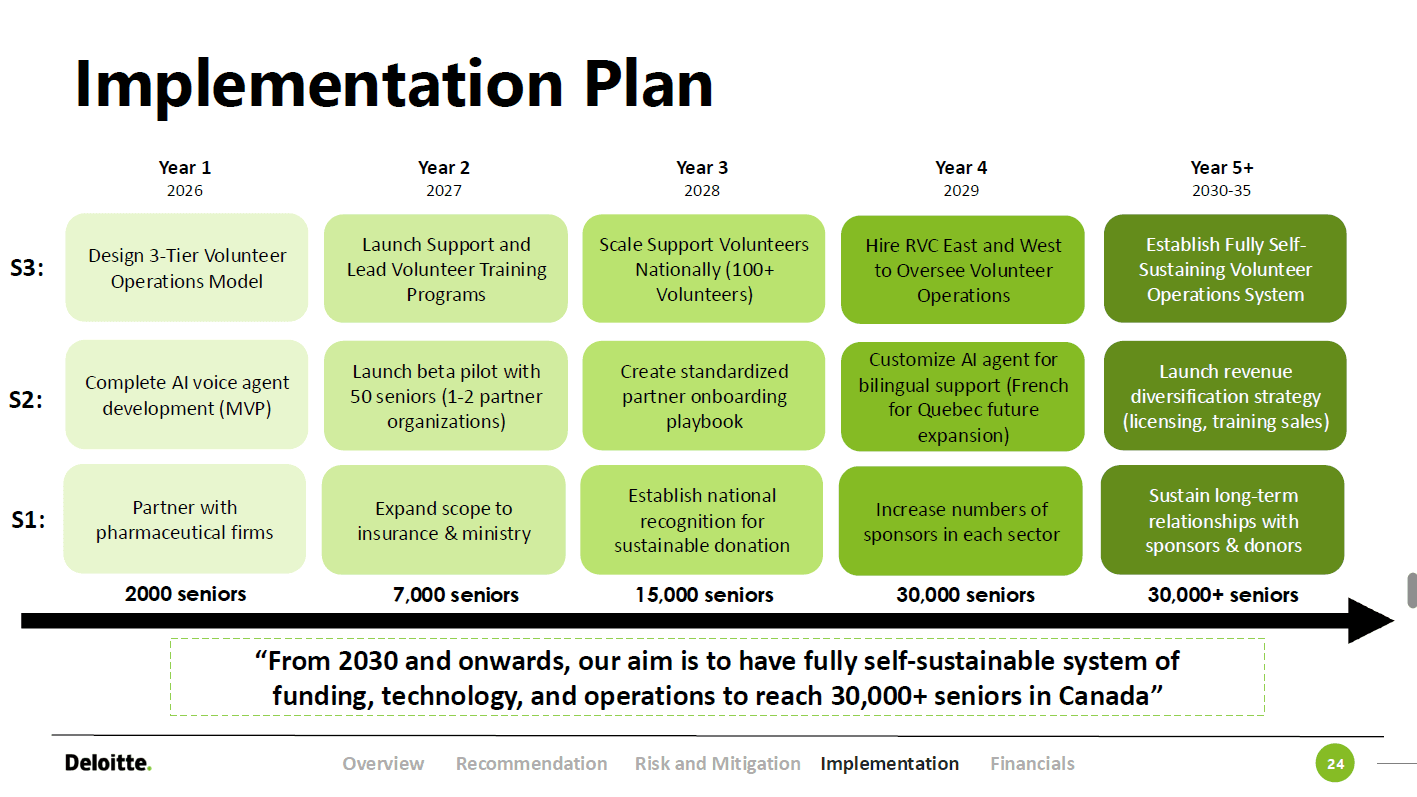
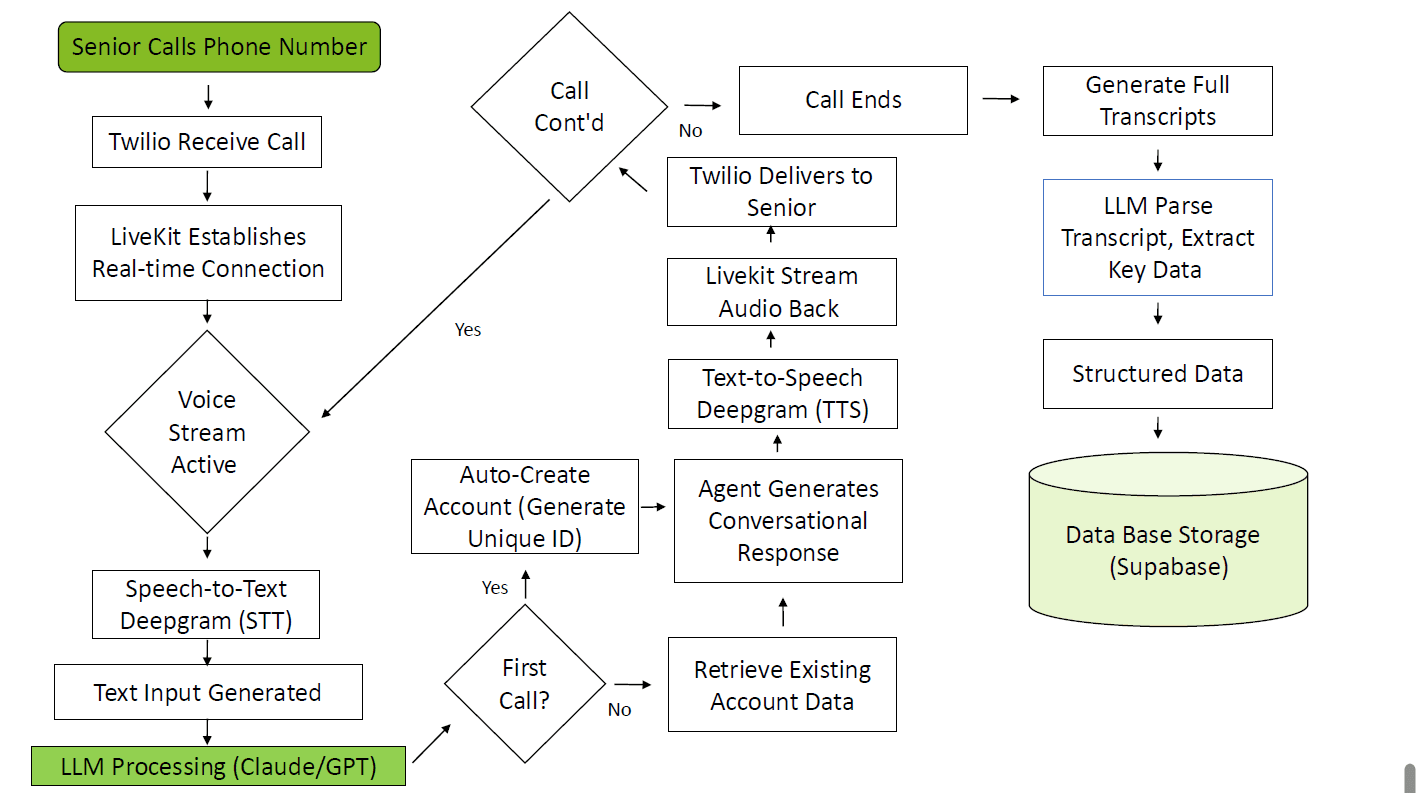
Developed a three-pillar strategy: (1) Diversified multi-sector strategic partnerships (pharma $3–4M, insurers $1.5M, provincial ministries $1M, licensing $1.5–2M), (2) Boardy AI voice-intake and matching system to reduce intake time by ~60%, and (3) Reorganized operations into a tiered volunteer-led model with phased FTE hires.
What It Does
Enables CompanionLink to scale from 150 to 30,000 seniors/year through diversified multi-sector partnerships, Boardy AI voice-intake automation, and tiered volunteer-led operations with phased FTE hires.
How We Built It
Used a structured consulting approach: stakeholder interviews and operational diagnostics, market research for partner opportunities, Boardy technical feasibility analysis, financial modeling with 4-year P&L, and organizational design for tiered volunteer model.
Gallery
Key Insights
- 1.Diversified funding reduces organizational risk and enables sustainable growth
- 2.AI voice-intake can reduce manual processing time by 60% while maintaining accessibility
- 3.Tiered volunteer models balance cost-effectiveness with quality
- 4.Strategic partnerships with pharma/insurers create win-win scenarios
- 5.Per-senior cost reduction from $47 to $13/year enables 200x scale
Solution Features
Diversified Funding Strategy
Multi-sector partnerships (pharma, insurers, provincial ministries, licensing) totaling $8M
Impact: Reduced funding concentration risk and enabled sustainable growth
Boardy AI Voice-Intake
AI-powered phone system with STT, LLM parsing, and automated matching
Impact: Reduced intake time by 60% and removed manual bottleneck
Tiered Volunteer Operations
Structured volunteer roles with phased FTE hires for governance and quality
Impact: Reduced per-senior cost by 72% while maintaining service quality
Metrics
Scale Target
30,000 seniors/year by 2029
plannedCost Per Senior
$13/year by Year 4
plannedFunding Secured
$8M across 4-year period
plannedIntake Time Reduction
60% reduction via Boardy
plannedChallenges
Ensuring Boardy vendor integration feasibility, proving pharma sponsorship plausibility, addressing potential senior resistance to AI onboarding, and managing operational risks during rapid expansion.
What We Learned
Successful nonprofit scaling requires balancing automation with human touch, diversifying funding to reduce risk, and designing operations for both cost-effectiveness and quality.
What's Next
Year 1: Boardy MVP pilot with 50 seniors. Year 2: Scaled pilot (2k seniors), initial pharma/insurer commitments. Year 3: National volunteer network expansion. Year 4: 30k seniors/year at sustainable funding mix.
Stack
2025